New Orleans is a city of stories. People swap tales on front porches, at neighborhood bars, and in line at the po-boy shop about the time something strange happened on their block. Out of those stories, certain beliefs about home security have taken root. Some of them are harmless. Others quietly leave homes exposed.
Talk to residents across the city and you will hear the same phrases over and over. My dog is all the alarm I need. My street is so busy no one would try anything. Cameras alone will scare people off. If something really happens, I will just call 911. These ideas feel true because they are repeated so often, and because most people have not seen what actually happens in those worst-case moments.
Technicians who work on alarm and camera systems move through a very different New Orleans. They are the ones who show up after a break-in or a small fire, who pull footage from cameras that did not capture what the homeowner expected, who test alarms that did or did not go off at the right time. They see, in detail, where comforting myths line up with reality and where they fall apart.
For homeowners, understanding that difference is powerful. It means you can keep the charm and community that make your neighborhood feel like home while building a security plan that reflects what really goes on in and around New Orleans houses every day.
The Comfort Of Familiar Myths
One of the strongest local beliefs is that a dog is as good as any alarm system. In many New Orleans neighborhoods, a barking dog is simply part of the soundscape. People grow up hearing those barks at every passerby, delivery driver, and stray cat. Over time, it becomes easy to believe that any stranger approaching the house would be loudly announced and sent running.
From the technician’s vantage point, however, dogs are inconsistent protectors. Some are endlessly vocal until the moment an actual threat appears, then go quiet or hide. Others are so friendly that a calm voice and an outstretched hand are all it takes to gain their trust. On hot, humid days, many pets stay where the air is cool and still, which often means they are in the wrong part of the house to notice someone working on a back door or slipping through a side gate.
There is also a painful truth that technicians encounter more often than homeowners realize. When a dog is the only line of defense, that animal can end up directly in harm’s way. Intruders who are determined enough to push through a barking dog are not thinking about its safety. The very creature meant to protect the home is suddenly the one most at risk. That is a heavy burden to place solely on a family pet.
Another familiar myth grows out of the rhythm of street life in areas filled with foot traffic and constant activity. Many residents of busier neighborhoods assume that all those people outside their windows provide a blanket of safety. The logic is simple: who would dare try to break into a home where there is always someone walking a dog, riding a bike, or sitting out on a stoop.
Technicians who review footage from homes on those same streets see how easily that assumption breaks down. The constant movement that feels comforting from inside actually gives a determined intruder cover. Strangers are common, so one more unfamiliar face rarely draws attention. Someone lingering by a gate or studying a side path does not stand out when passersby are used to food delivery drivers, service vehicles, and tourists pausing to check their phones.
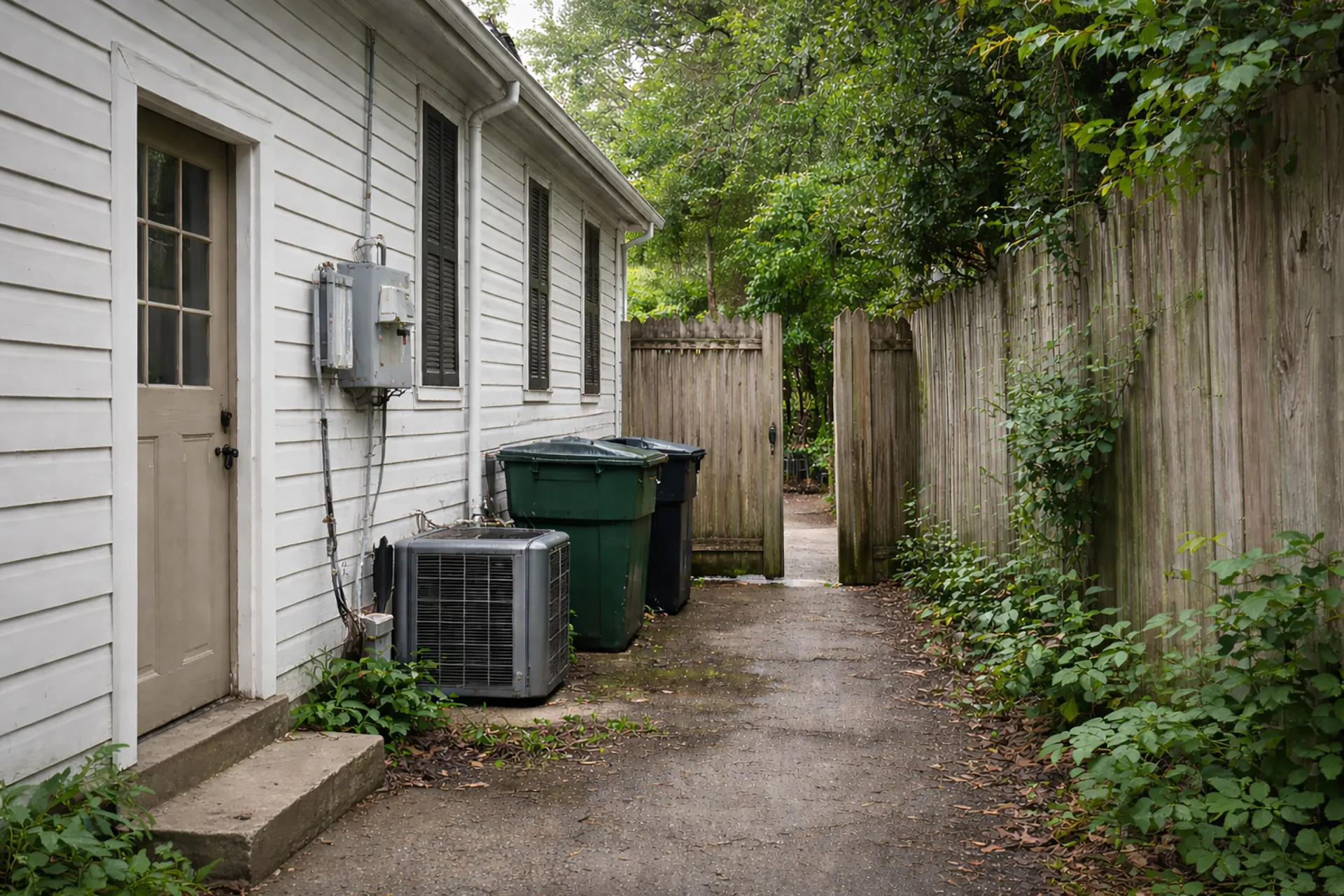
Once an intruder slips down a narrow alley between shotgun homes or into a backyard screened from the street, they are effectively invisible. Many New Orleans houses have long, skinny layouts with multiple doors that cannot be seen from the sidewalk. Technicians often find that entry points most frequently used in a break-in are the ones the homeowner rarely thinks about, precisely because they feel the front of the house is protected by constant activity.
These myths stick around because they are comforting. It feels good to believe your devoted dog or your lively block is all you really need. Field experience tells a different story. Dogs and busy streets can absolutely help, but they work best as part of a layered plan rather than as the entire strategy. When technicians design systems, they look at where those natural defenses end and make sure technology covers the gaps.
When Cameras Are Not A Complete Security Plan
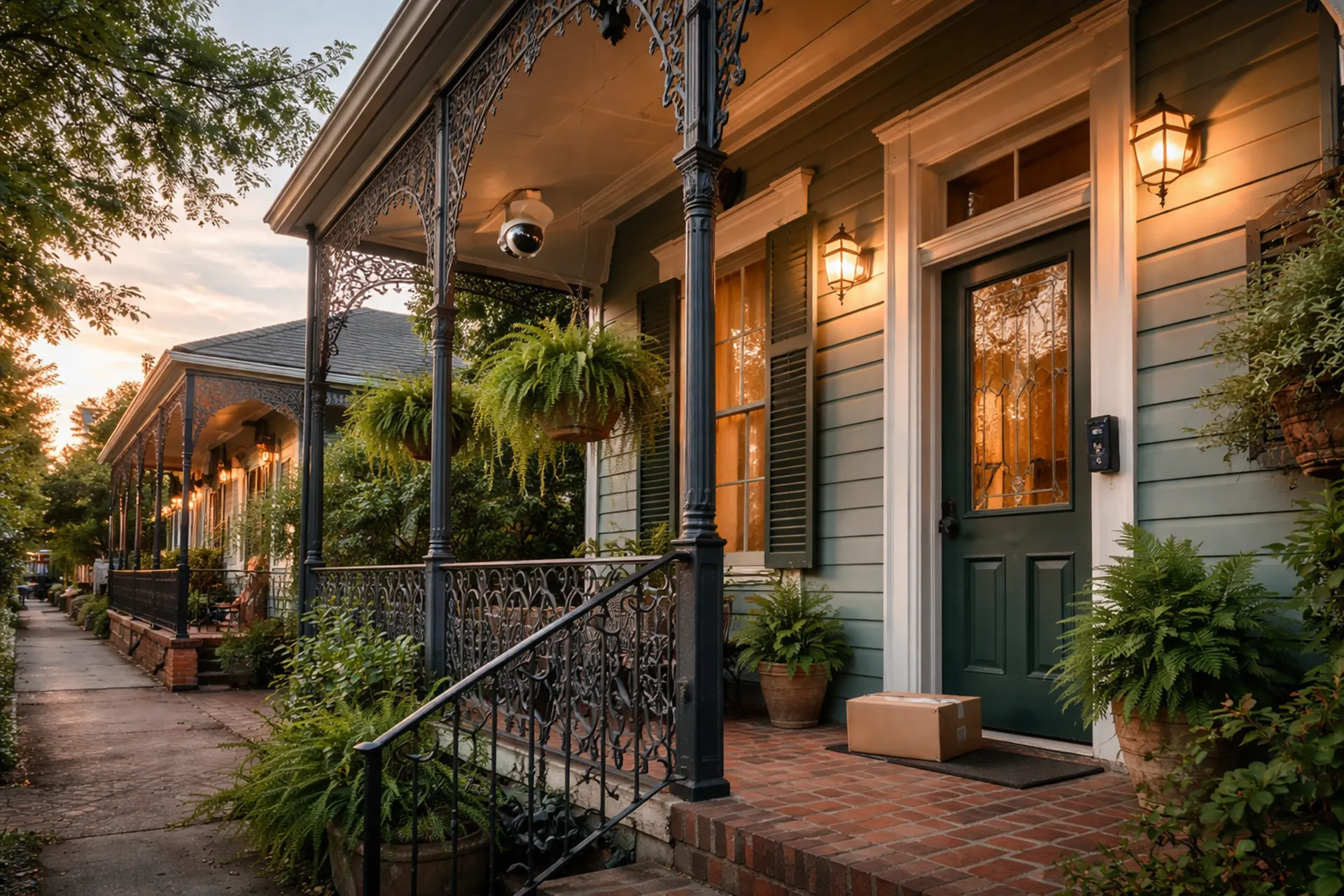
The rise of affordable cameras has reshaped how many New Orleanians think about home security. A small device by the front door, a floodlight camera over the driveway, or a neat little dome under an eave can make it feel like everything is under control. It is easy to slip into the belief that once cameras are up, the job is done.
Technicians are frequently called to homes where this belief has already been tested in the worst possible way. In some cases, cameras were never fully set up. Motion detection was left on its default settings, leading to constant alerts from passing cars and swaying trees. Eventually, the homeowner turned notifications off to stop the noise, only to realize after an incident that the system had not been paying attention where it mattered.
Sometimes, the cameras were working as designed but pointed in the wrong places. Doorbell cameras might capture beautiful footage of the street while missing the narrow passage that leads to a rear entry. A driveway camera may be angled high, showing the tops of vehicles but not the path someone takes as they walk toward the house. The result is that the footage from the time of the incident shows movement, but not the crucial details needed to identify how and where someone got inside.
Even when cameras record useful images, they are still just one piece of the puzzle. Video alone does not contact emergency services. It does not sound a siren to wake a sleeping household or startle someone into leaving sooner. It does not send a signal to a trained operator who can decide whether to dispatch police or fire. At best, footage is a record of what already happened, not a tool that changes what happens as events unfold.
Technicians see the difference when cameras are woven into a broader system. When a door or window sensor trips, the alarm not only starts recording but also alerts a monitoring team. If smoke or carbon monoxide is detected, the same network that supports the cameras can be used to send urgent signals even when the homeowner is not there to see or hear anything. Smart configuration can help distinguish between normal movement and a real threat, reducing false alarms and making it more likely that real events get rapid attention.
They also know how to place cameras based on the patterns they witness every week. They focus not just on the obvious front door view, but on the side entries, back steps, fence lines, and driveways that intruders actually use. In a city full of long, skinny lots and homes with multiple additions over the years, those less glamorous angles matter. Cameras become truly valuable when they are part of a system designed with those realities in mind rather than scattered around as standalone gadgets.
Being Home And Other False Senses Of Security
Another widespread belief in New Orleans is that being home most of the time is its own kind of protection. Many residents work remotely, run small businesses out of their houses, or keep irregular schedules. There is a sense that if you are around during the day and sleep at home at night, you do not need much formal security. The assumption is that if anything serious were happening, you would hear it, see it, and be able to respond.
Technicians who respond to real alarms often meet families who were inside the house when something went wrong and had no idea until the system activated. Sound travels strangely in New Orleans homes. High ceilings, long hallways, and old walls can soften or redirect important noises. A quiet attempt to open a back window, a slow burn from an electrical short in an extra room, or the first wisps of smoke from an overloaded outlet can all unfold without drawing attention from someone in a busy front living room.
People also overestimate how calm and capable they will be in a crisis. It is easy to picture yourself grabbing a phone, calling 911, and giving clear directions. In real emergencies, attention snaps first to loved ones and pets. Parents race to children’s bedrooms. Others try to figure out what that strange sound was or where the smell is coming from. Phones may be across the room, in a bag, or left in the car. Every second spent searching for a device is a second where no one is calling for help.
In some situations, calling at all becomes impossible. Smoke, heat, or panic can make it hard to move quickly. A fall on a dark staircase or in a cluttered hallway can leave someone stunned or unable to reach a phone. Technicians can tell stories of times when the first sign something was wrong came not from the homeowner, but from the monitoring center reacting to a signal from a smoke sensor, door contact, or motion detector.
There is also a softer version of this myth: the belief that systems are only needed when everyone is away for long trips. In reality, incidents frequently happen in the small windows when people think they will only be gone for a moment. A quick run to pick up food, a short walk to a neighbor’s gathering, or a brief trip down the street to catch part of a parade can easily stretch longer. Intruders pay attention to those patterns. They notice homes that appear to empty out at predictable times, especially if there is no visible sign that an alarm is present.
Technicians see the impact of simple habits that turn a system into a constant companion rather than an occasional backup. Arming the system at night or using a stay mode that protects doors and windows while people move around inside adds a quiet layer of safety. Using phone controls to arm the system when heading out, even for a short time, means protection is always active. When people see their system as something to use every day, not just on special occasions, many of these subtle risks begin to shrink.
The idea that presence equals safety is understandable in a city where neighbors look out for each other and people take pride in being street-smart. The view from the technician’s side shows how quickly that sense of control can slip when something unexpected happens. A monitored system does not replace human awareness, but it extends it into the moments when attention is pulled elsewhere or circumstances make it hard to react.
Who Really Needs A Security System In New Orleans
Beneath many of these myths lies a broader assumption about who security systems are really for. Some residents quietly feel that alarms, cameras, and monitoring belong either in high-crime pockets of the city or in large, expensive properties with obvious valuables. If a home does not fit either extreme, it can be tempting to write off security as something other people invest in.
Technicians who visit a wide range of homes know that risk does not sort itself neatly by zip code or property value. They install systems in modest doubles, compact condos, raised cottages, and sprawling houses, often within the same week. Intruders rarely select a target based on architecture or decor. They look for opportunities. That might mean a door that sticks and is rarely locked tightly, a window shaded from the street, a pattern of packages sitting outside, or simply a house that looks quiet and unprotected.
They also encounter fire and life safety issues that have nothing to do with size or style. Older space heaters tucked into corners, extension cords snaking under rugs, improvised fixes to aging outlets or fixtures, and makeshift solutions for summer cooling are all part of daily life for many families. None of that is unique to a specific neighborhood. When something goes wrong in those setups, the speed of detection and response makes a profound difference.
The belief that systems are always complicated or reserved for large-scale properties can also keep people from exploring options that fit their actual needs. Many New Orleans homes were built long before anyone imagined today’s technology. Owners worry that adding security will require tearing into walls or committing to rigid, expensive packages that do not match how they live. Technicians have watched that hesitation fade when homeowners see a design tailored to their specific layout and budget.
Sometimes that design focuses on a few crucial points of entry and a compact set of sensors in a small home. In other cases, it includes a mix of intrusion and life safety devices across a multi-story property. The key is that the plan reflects the rhythms of the family, the quirks of the building, and the realities of the neighborhood, not an abstract idea of what a secure home ought to look like.
The technicians who move from one job site to another carry those examples with them. They see how a carefully placed sensor stopped a break-in at a modest house, how a monitored smoke detector triggered help early in a cramped upstairs bedroom, how a small camera aimed just right captured the one angle that mattered. They also see where nothing was in place, where myths were the only protection, and where homeowners are left wishing they had taken a different approach earlier.
In a city as layered and complex as New Orleans, the question is not whether you fit some imagined profile of a person who needs security. The better question is how you can line up what you believe keeps you safe with what actually works in practice. Technicians are uniquely positioned to bridge that gap. They bring quiet, practical insight from real homes and real incidents, and they turn that into systems that match the way people here truly live.