
Surveillance Infrastructure: Cameras, Sensors, and the Street
New Orleans’ schools and campuses are watched by a patchwork of sensing technologies that range from traditional closed-circuit television to automated traffic cameras that sit on poles outside school gates. The most visible elements of that system are the fixed video cameras that record routine activity on entrance plazas, in hallways, and around perimeter fences. On major thoroughfares, the city’s school-zone speed cameras and flashing beacons sit alongside standard red-light cameras; these street-mounted devices are intended to slow vehicles where children walk and wait for buses, and their operation has been a recurring flashpoint between municipal authorities and school leaders. The activation and deactivation of those systems have not been purely technical decisions: they frequently reflect changes in state law, municipal agreements, and public debate about due process and revenue allocation.
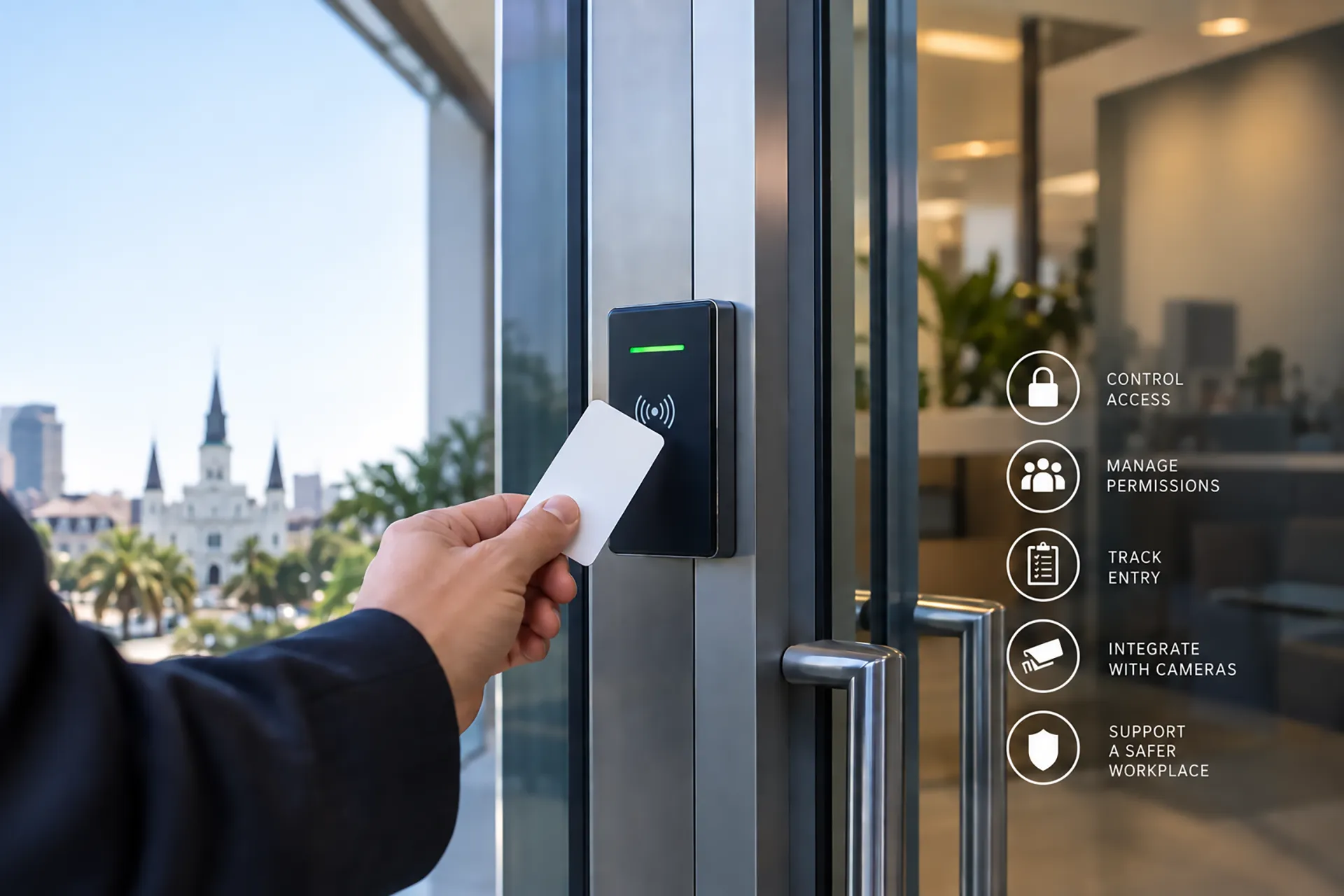
Inside buildings and on college campuses, the surveillance mix looks different. Campus security teams at private and parochial schools and universities deploy access-control systems, door alarms, and badge readers that connect to central monitoring stations. Smaller charter campuses and neighborhood elementary schools, constrained by budget, often rely on a few well-placed cameras and strategic sightlines rather than comprehensive sensor networks. Transit points where students arrive and depart are common sites for higher-density monitoring, partly because a single camera can be argued to cover a high-risk vector for traffic-related harm as well as potential intrusion events. On the street side, the fate of traffic-enforcement cameras—whether they are issuing citations, simply recording data, or switched off for legal reasons—shapes what kind of surveillance ecosystem exists immediately adjacent to campuses.
The visible hardware is only part of the story. Many school systems combine video with loudspeakers, emergency notification systems, and intercom-triggered lockdown mechanisms that are designed to move a building from “open” to “secured” within seconds. These layers are coordinated through district crisis plans that specify who receives alerts, how long recordings are retained, and what data is shareable with law enforcement. The connected nature of modern systems can make a technical failure feel like a policy failure when a camera or beacon goes offline at a sensitive time, and residents have repeatedly watched municipal and district administrators scramble to explain outages or to mitigate the appropriate use of street-mounted enforcement technology.
Policy, Governance, and the Charter Landscape
New Orleans’ post-Katrina educational landscape—marked for years by an unusually high share of charter schools and by repeated governance transitions—creates a governance environment in which responsibility for surveillance is diffuse. Many campuses are run by independent charters that contract their own security vendors, while others are governed directly by district offices or parochial authorities with centralized purchasing and vendor contracts. That decentralization complicates attempts to draft a single, parish-wide standard for camera placement, retention schedules, or vendor vetting. The variability in procurement means that one campus might use a commercial cloud video service with long retention and extensive remote access, while a neighboring charter operates a domestically hosted, minimal-retention system. This patchwork has consequences for equity, accountability, and transparency because families and teachers experience wildly different visibility regimes depending on what provider a school can afford or elects to install.
The Orleans Parish School Board has authorized the use of video and audio monitoring on school board property, and their policies establish the framework for where cameras may be used and why. These official guidelines are designed to balance safety concerns with privacy, setting baseline expectations for administrators about how monitoring may be used to safeguard students, staff, and facilities. When municipal cameras mounted on public streets and poles capture activity in or around school property, that footage sits at the intersection of city and school governance and creates practical questions about who has the authority to grant access or to direct law enforcement to act on what the camera records.
Another layer of governance concerns the revenues generated by automated enforcement systems. The city’s school-zone ticketing program has been repeatedly subject to legal scrutiny and legislative change, and the allocation of those revenues has at times been contested between municipal government and school authorities. In recent years, the city and school board have negotiated cooperative agreements to make certain portions of enforcement revenue available to schools, and the mechanics of those agreements directly affect whether traffic-safety cameras are prioritized, upgraded, or left idle. When enforcement revenues are held in escrow because of legal uncertainty or state mandates, planned investments in safety infrastructure can be delayed, producing a policy ripple effect that touches budgets, vendor contracts, and the lived experience of parents and school staff.
Technology in the Loop: AI, Analytics, and Access
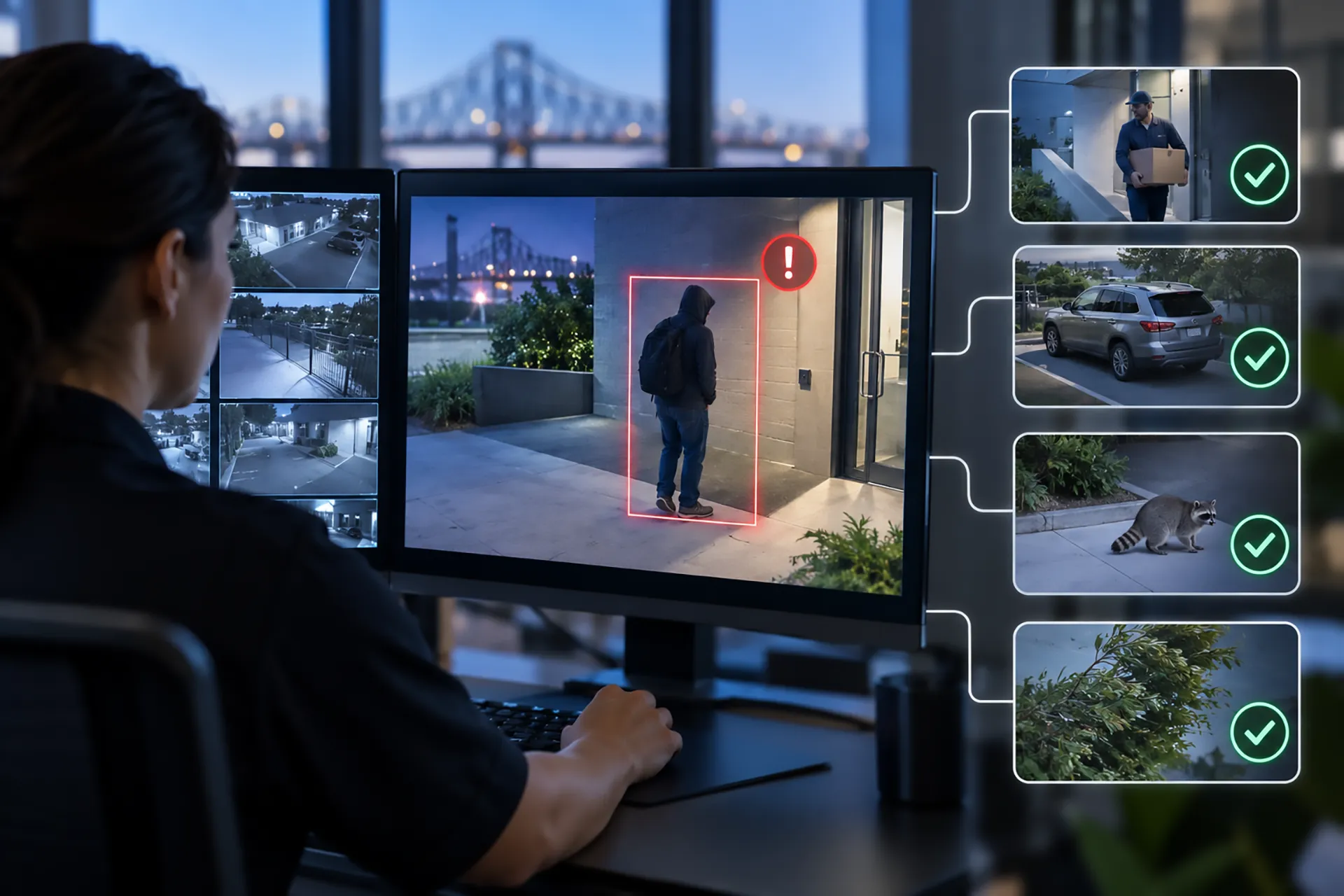
The technical sophistication of surveillance tools in New Orleans schools has grown in ways that mirror national trends. In addition to recording video, many modern deployments offer analytic layers that attempt to automate threat detection, triage alerts, or integrate with emergency management platforms. Some school systems have explored or implemented third-party artificial intelligence designed to detect weapons in video feeds and then alert administrators and first responders. These systems are pitched as ways to compress detection and response time, but they also raise familiar questions around accuracy, false positives, and the consequences of automated alerts for students who may be misidentified. The usefulness of such systems depends as much on their integration with trained human operators and clear procedural rules as it does on the underlying algorithmic performance.
Access control and data governance are technical problems with administrative solutions. The simplest cameras record to a local server and overwrite footage after a set retention window; the most complex systems stream to cloud vendors and allow remote access by multiple stakeholders, including school staff, district officials, and, in some cases, municipal police departments. These access pathways are where policy design matters because the same footage that helps reconstruct a traffic crash can also be repurposed for disciplinary investigations or criminal prosecutions. Districts that centralize video oversight can more easily implement role-based access controls, audit logs, and standard retention schedules; those that leave procurement to individual campuses often end up with a plurality of vendor terms of service and a lack of consistent auditing. That inconsistency can create legal exposure and community resentment when footage is shared without transparent notice or when parents discover their children’s images are retained for longer than they expected.
Beyond cameras and analytics, schools in New Orleans use conventional security complements such as school resource officers and coordinated drills. The New Orleans Police Department has policies that define the role and responsibilities of school resource officers, clarifying how sworn officers are expected to respond to incidents on school property and to collaborate with school administrators. These policies shape how recorded evidence is used in investigations and determine, in practice, which agency ultimately controls a response when an incident is reported via a camera feed. The presence of officers and the degree to which schools rely on law enforcement for everyday safety are often as consequential as the cameras themselves for shaping student experience.
Community, Privacy, and the Politics of Safety
Debate over surveillance in New Orleans schools is not only about hardware and budgets; it is fundamentally a conversation about values, trade-offs, and trust. Many parents and educators accept cameras and controlled entry as reasonable steps to deter theft, monitor for emergencies, or gather evidence after an incident. For others, heightened surveillance reproduces broader concerns around criminalization, especially in communities that have had adversarial relationships with police. When video footage is routinely made available to law enforcement or when automated analytics disproportionately flag students of color because of biased training data, surveillance becomes an instrument of inequality rather than a neutral safety tool. Community groups and civil liberties advocates therefore press for stronger transparency: clear notices to families about what is recorded, how long it is kept, and who may see it; robust auditing of vendor practices; and governance structures that ensure surveillance investments are paired with investments in counselors, restorative justice practitioners, and other non-punitive supports.
The politics of safety in New Orleans also involves fiscal politics. When traffic camera revenue is allocated to schools, administrators can envision investments in safer drop-off zones, improved lighting, or more comprehensive camera systems on campus. But when those funds are tied up in legal disputes or when legislative changes suddenly limit automated enforcement, the intended safety upgrades can stall. The result can be a cycle in which the visible infrastructure for safety—beacons, cameras, and sensors—lags behind public expectations, prompting calls for short-term fixes such as increased patrols or temporary lockdown protocols that can strain relationships between schools and surrounding neighborhoods.
Trust is also built or broken by how schools communicate about surveillance incidents. When a recorded event leads to a timely explanation and a visible change—an adjusted traffic sign, a repaired camera, or an updated visitor policy—parents often interpret surveillance as part of a responsive safety culture. When footage is opaque, used inconsistently, or appears to be disproportionately focused on monitoring rather than on support for students, the cameras become symbols of exclusion and oversight. Policymakers who want surveillance to serve safety must therefore consider procedural transparency as an essential technical specification: not simply the megapixel count of a camera, but the human processes that determine what is done with its images.
As New Orleans and its schools continue to negotiate the practicalities of surveillance—what gets monitored, who controls the feeds, and how revenues are spent—the choices they make will shape not only the physical safety of campuses but also the civic norms around privacy and public visibility for an entire generation.
APS: Local Commitment to Safety and Community Trust
Alarm Protection Services (APS) stands apart as a local partner rooted in the same neighborhoods our schools serve. As a second-generation, family-owned company based in New Orleans, APS takes pride in protecting the places where our children learn, grow, and form lifelong relationships. We work directly with school leaders to design systems that are not only effective, but also respectful of students, staff, and community values. Our approach prioritizes transparency, responsible use of technology, and hands-on collaboration with campus personnel. Whether integrating access control, improving campus visibility, or deploying remote monitoring tools that deter risks in real time, APS is committed to ensuring that safety infrastructure supports a nurturing, welcoming environment—not one of fear or over-surveillance. For us, this work is personal: these are our schools, our families, our city—and the protection of our children is a responsibility we honor with care, professionalism, and heart.
Do you know a school that needs better security?
Alarm Protection Services (APS) partners with schools and campuses across Greater New Orleans to design, install, and monitor comprehensive security systems — from surveillance and access control to fire protection and emergency response.
👉 Contact APS today to schedule a security consultation and help protect the next generation.